
Online and direct bookings enter a schedule with the real practitioner, room, service, duration, and availability.
Clinic software for scheduling, intake, and patient records
Scheduling, intake, patient profiles, forms, reminders, payments, and reports — Reservation.Studio Business keeps the clinical workday organized.
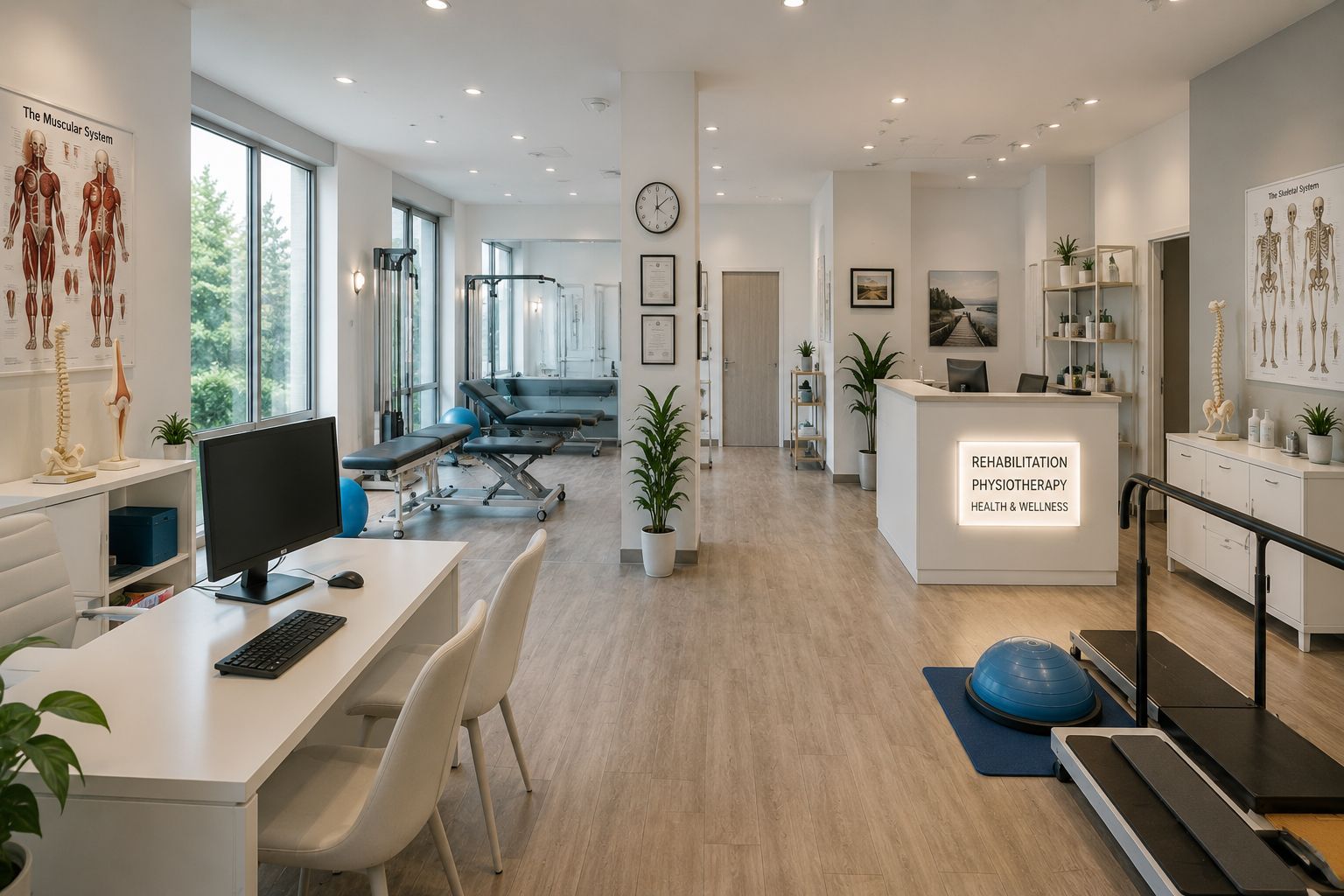
Good fit for Physiotherapy and rehab, Orthopedics and specialty practices, Dermatology and aesthetic medicine, and Clinics with reception and a team
More specific solutions
Choose the closest clinical model
Physiotherapy, rehab, and specialty practices work at different rhythms. Start from the scenario that feels closest to your day.
Dental practice For dental practices where the schedule by dentist and room, patient history, consents, and payments need to run in one system. See the solution Physiotherapy and rehab For physiotherapy, rehab, and kinesitherapy teams where first visits, follow-up sessions, patient history, and front desk work need to stay connected day after day. See the solution Specialty clinic For dermatology, orthopedics, aesthetic medicine, and other specialty practices where scheduling, front desk work, patient profiles, forms, and next steps need to move together. See the solution
When the clinic needs more than a calendar
When the clinic needs one system around the whole visit
Clinics and rehab centers do not only manage open slots. Each visit can involve booking, intake, preparation, a form, practitioner, room, patient history, payment, reporting, and a next step. When those parts live in separate lists, reception carries too much risk and manual work.
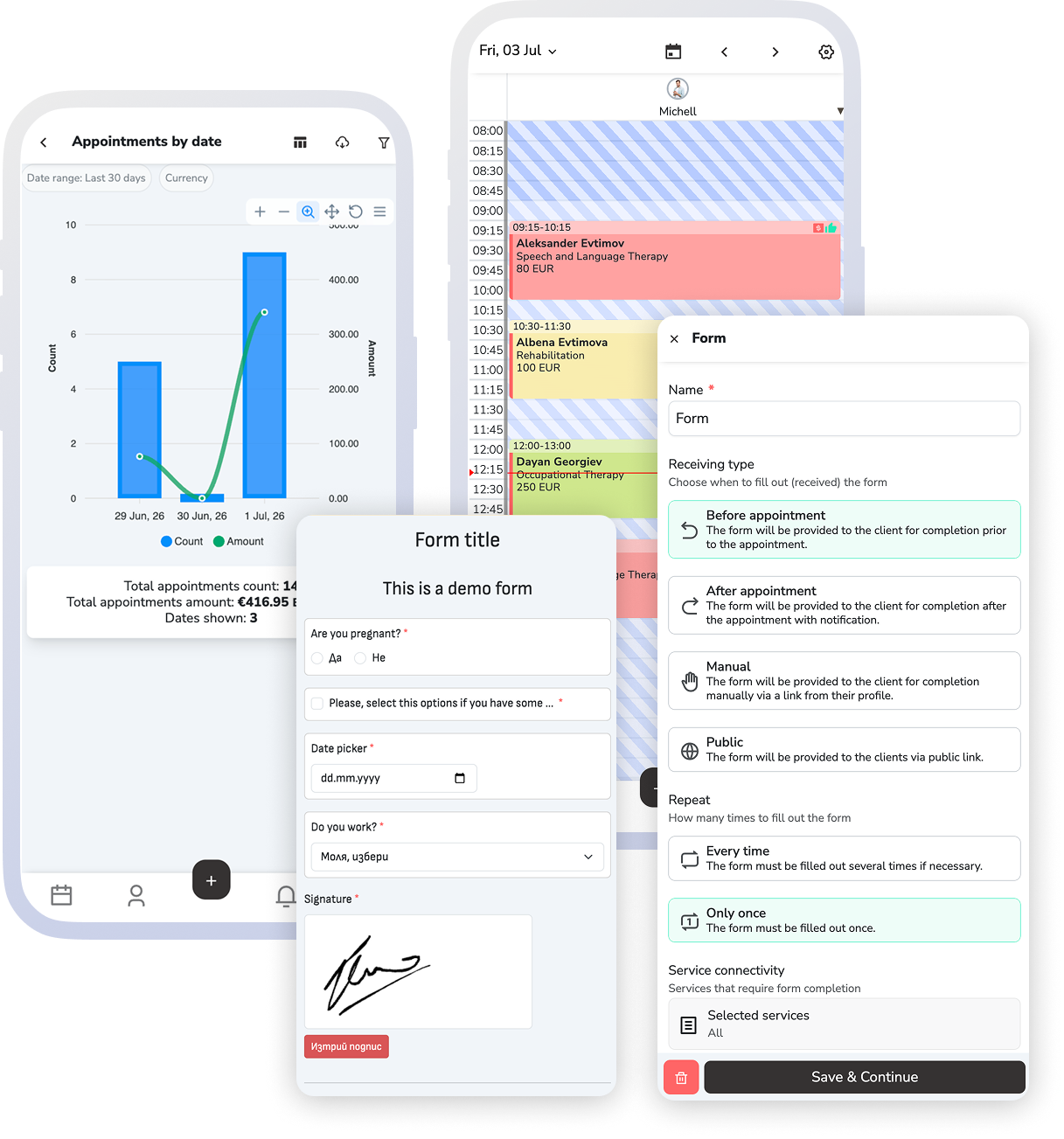
Reception sees arrivals, changes, confirmations, forms, payments, and next steps in one view of the day.
The patient profile keeps visit history, notes, forms, documents, balances, and everything that matters before the next appointment.
Reminders, informed consents, and pre-visit preparation stay connected to the patient and booking.
For practices that use NHIS, electronic examinations can stay in the same system instead of becoming a separate admin step.
How it works day to day
How an organized clinic or rehab day works
Reservation.Studio Business connects public and internal booking with the schedule, patient profile, pre-visit preparation, reception work, and reports.
Set up services, durations, practitioners, rooms, working hours, and availability around the way the practice actually operates.
Bookings from phone, reception, website, widget, or public profile enter the same schedule the team uses during the day.
Before the visit, the team can see the patient profile, history, required forms, consents, reminders, and missing steps.
At arrival, reception handles status, intake, changes, payment, and the next appointment from one place.
When the practice uses NHIS, electronic examination handling, statuses, and signing stay in the same system instead of becoming separate admin work.
What the practice gains
Cleaner intake, better patient continuity, and clearer control of the day
The practice gets one shared picture: the patient, reception, practitioner, and manager do not have to rebuild information from separate places.
Less administrative pressure on reception
The team sees bookings, arrivals, changes, pending actions, and payments in one place, through the whole day.
Better preparation before the visit
Forms, consents, reminders, and missing steps surface earlier, not only when the patient is already on site.
Clearer continuity for the patient
Visit history, notes, documents, and next steps stay inside one profile the team can use again at the next appointment.
Clearer management picture
Managers can see workload, visits, payments, missed steps, and areas that need attention earlier.
Clinic FAQ
What practices usually want clarified before a demo
Is this only for large clinics?
No. It is useful for smaller practices too when scheduling, intake, patient profiles, forms, and payments are already being managed across several disconnected places.
Is this a full medical information system?
We do not position it as a hospital HIS/EMR for every type of medical documentation. The focus is the day-to-day work around booking, intake, patient profile, forms, reminders, payments, reporting, and NHIS where relevant.
Is it suitable for physiotherapy and rehab?
Yes. In those practices the value often comes from repeat visits, treatment series, reminders, and giving the team clearer history and the next step.
Do we have to use NHIS?
No. NHIS matters for medical practices that actually use it. If the practice does not use NHIS, the core value remains scheduling, intake, patient profiles, forms, payments, and reporting.
What usually has to go live first?
Most practices start with the schedule, services, practitioners, reception, patient profiles, forms, and reminders. NHIS, reporting, and specific rules can follow once the basics are running.
Our patients book by phone — do they have to move online?
No. Reception keeps booking by phone in the same calendar, just as before. Online booking is an extra channel for the patients who prefer it — both fill the same schedule and do not get in each other's way.
Who it is for
Most useful when intake, profiles, and preparation already shape the whole workday
A demo is most useful when the practice wants to move from calendars, notes, and separate files to more organized booking, intake, preparation, profiles, payments, and reporting.
Clinics and practices with several practitioners, rooms, services, or a busier reception flow
Physiotherapy and rehab centers where one intake often leads to a series of repeat visits
Specialty practices where forms, consents, notes, and preparation affect how the visit starts
Medical practices that work with NHIS and want reporting and intake in the same system
Ask for a demo
See how Reservation.Studio Business fits your practice
In a demo, we can walk through scheduling, reception, patient profiles, forms, reminders, payments, reports, and NHIS if your practice uses it.
Free, with no obligation — during business hours we call back almost immediately. Paid plan from €13.50 a month; with up to 3 employees you start without a subscription.